
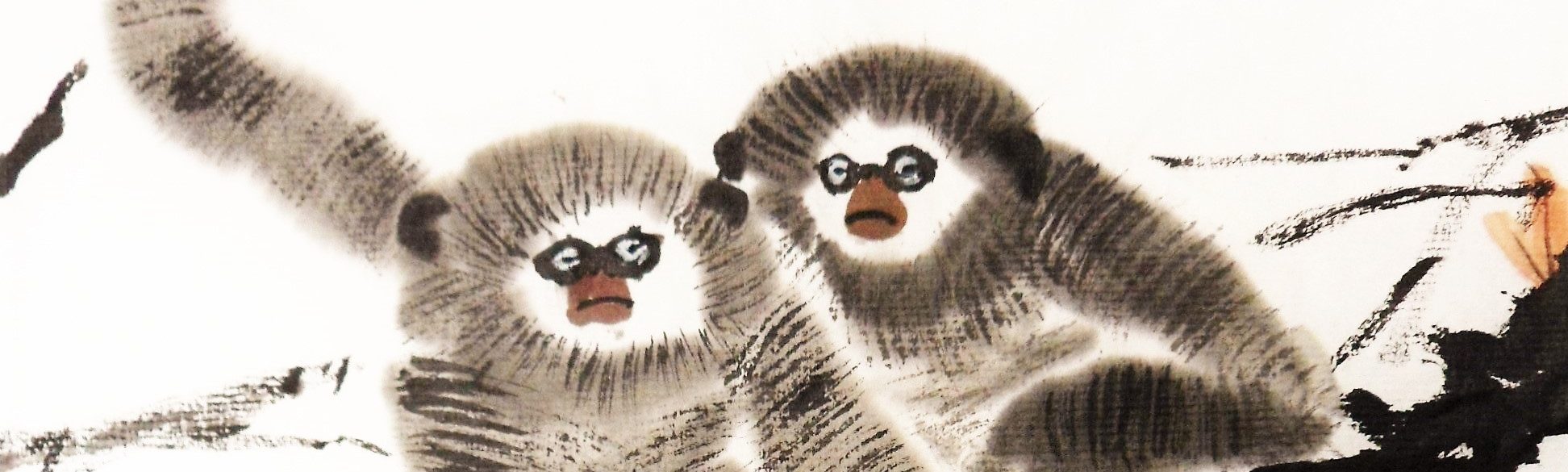
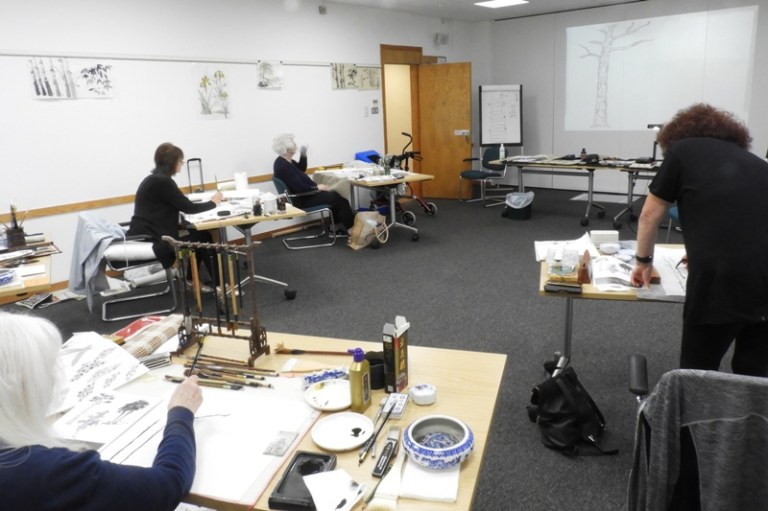
It has been some while since I have had chance to post and as I managed to forget certain paintings for the workshop last Saturday (7th December 2024) I thought I would post them up here so that you can see how they link to this fabulous subject.
Painting Snow on Bamboo is one of the most challenging subjects in Chinese Brush Painting since this subject, in its most traditional format, involves negative painting. This is when we choose where the snow is going to be and purposefully do not paint this so that this becomes the area of untouched paper. Rather, the lines and washes are painted around the snow which does mean a bit more planning is required…
I started on Saturday with a very simple demo showing two different clumps of bamboo leaves:
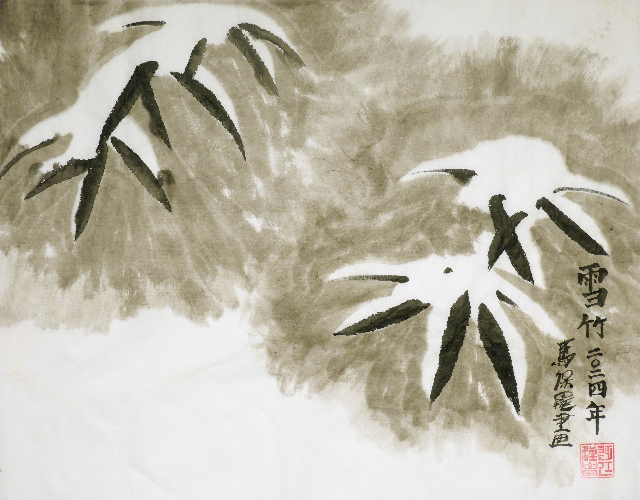
Having got the idea of the above, we then expanded this out to building up the entire bamboo. The simplest way to do this is simply to paint the bamboo in pure ink and let it dry completely. Single xuan paper is recommended for this subject especially as what we do next uses the quality of this paper – its thinness!
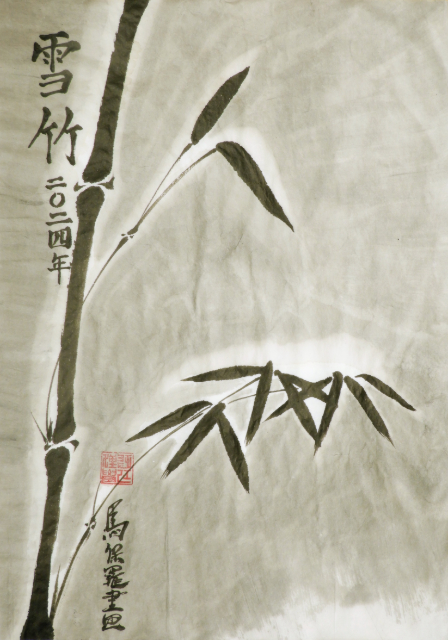
Once the ink is dry we turn it over and wash the areas on the back that we don’t want to have snow on. This must be done speedily and preferably with the brush continually touching the paper in order to avoid streaky watermarks which will show up on the front. The wash will spread and how far it spreads is down to the type of xuan you use. The same thing can be done again with a more complex composition in order to understand more about where the wash needs to go and not go…
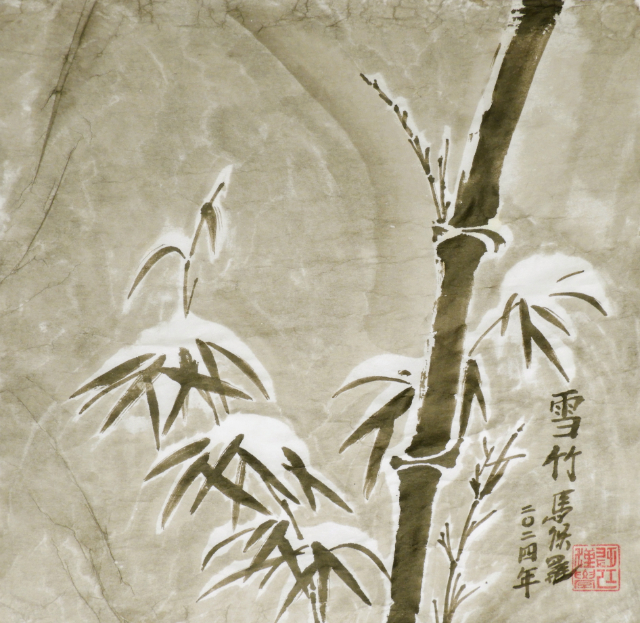
As an aside, this technique can be applied in a different way using lining paper (where we can only paint on the front) in order to explore a misty effect along with possible overpainting to bring out different effects. This paper is not ideal as there is no spreading, even of a really watery wash, as the ink tends to stay where it’s put and you may also get pooling. However, it is really cheap and does allow you to see the effect you are after, in case you’re having problems with the wash spreading so far it gets rid of the snow. It also allows you to practice with lighter shades for the bamboo which is much harder to execute on single xuan.
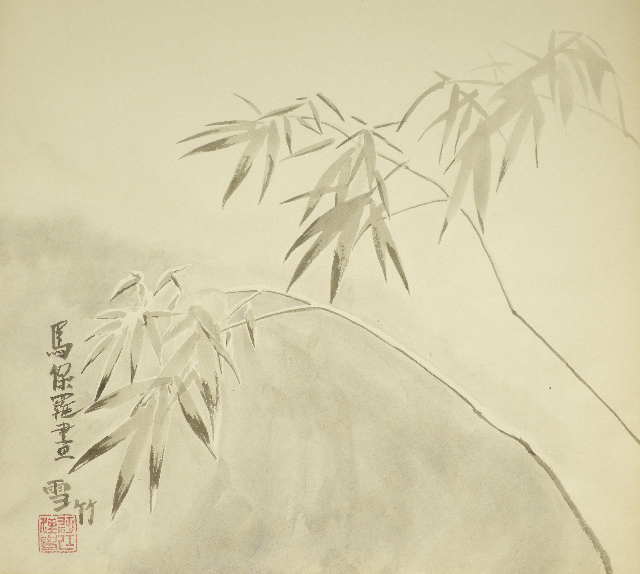
Grass paper can also be used for this exercise but of course you will have the grass paper colour come through instead of a white, which you may not want. However, if you do want a more tea-stained look to your picture, try grass paper…
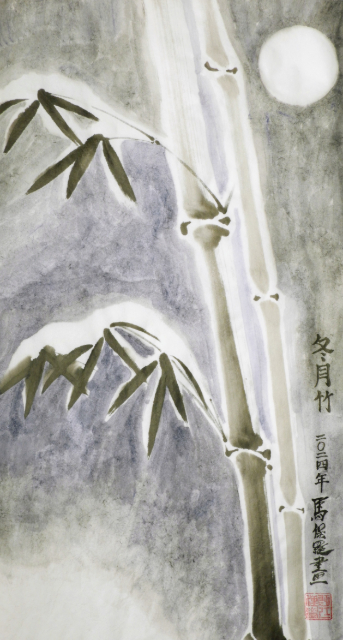
Finally, I demoed a slightly different technique on xuan which gives the feel of glowing winter snow. I also mixed my grey with a traditional indigo in order to create the wash for the Winter Moon Bamboo below. Students didn’t get a chance to see what this dried back to so here you are:
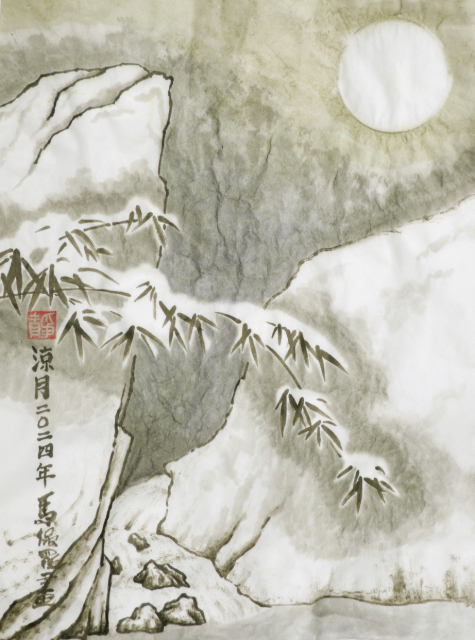
UPDATE 16 Dec 2024: In order to complete this section I wanted to show bamboo in a landscape. In honour of the final full moon of the year (the Cold Moon) I have worked up the following painting in order to show the above in context. It’s by no means the final article but here it is…
Thank you for reading,
Paul







 Double Happiness Studio MH